

①The elements that stabilize the α phase and increase the phase transition temperature are α stable elements, such as aluminum, carbon, oxygen and nitrogen. Among them, aluminum is the main alloying element of titanium alloy, which has obvious effects on improving the normal and high temperature strength of the alloy, reducing the specific gravity and increasing the elastic modulus.
②The elements that stabilize the β phase and reduce the phase transition temperature are β-stabilizing elements, which can be divided into two types: isomorphic and eutectoid. The former has molybdenum, niobium, vanadium, etc.; the latter has chromium, manganese, copper, iron, silicon and so on.
③ The elements that have little effect on the phase transition temperature are neutral elements, such as zirconium and tin.
Oxygen, nitrogen, carbon and hydrogen are the main impurities in titanium alloys. Oxygen and nitrogen have greater solubility in α phase, which has a significant strengthening effect on titanium alloys, but reduces the plasticity. Usually, the content of oxygen and nitrogen in titanium is 0.15-0.2% and 0.04-0.05% or less, respectively. The solubility of hydrogen in the α phase is very small, and too much hydrogen dissolved in the titanium alloy will produce hydride, which will make the alloy brittle. Usually, the hydrogen content in titanium alloys is controlled below 0.015%. The dissolution of hydrogen in titanium is reversible and can be removed by vacuum annealing.
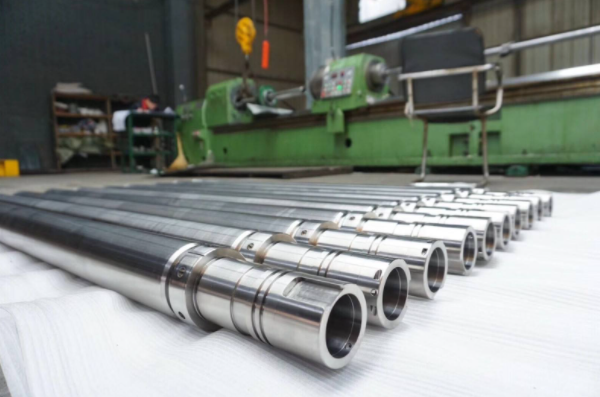
Titanium is an allotrope with a melting point of 1668 °C. When it is lower than 882 °C, it has a close-packed hexagonal lattice structure, which is called α titanium; when it is above 882 °C, it has a body-centered cubic lattice structure, which is called β titanium. Using the different characteristics of the above two structures of titanium, adding appropriate alloying elements to gradually change the phase transition temperature and phase content to obtain titanium alloys with different structures. At room temperature, titanium alloys have three matrix structures, and titanium alloys are divided into the following three categories: α alloys, (α+β) alloys and β alloys. China is represented by TA, TC, and TB.
α titanium alloy: It is a single-phase alloy composed of α-phase solid solution. Whether it is at ordinary temperature or at higher practical application temperature, it is α-phase, with stable structure, higher wear resistance than pure titanium, and strong oxidation resistance. At the temperature of 500 ℃ ~ 600 ℃, it still maintains its strength and creep resistance, but it cannot be strengthened by heat treatment, and the room temperature strength is not high.
β titanium alloy: It is a single-phase alloy composed of β-phase solid solution. It has high strength without heat treatment. After quenching and aging, the alloy is further strengthened, and the room temperature strength can reach 1372-1666 MPa. However, it has poor thermal stability and is not suitable for use at high temperatures.
α+β titanium alloy: It is a dual-phase alloy with good comprehensive properties, good structural stability, good toughness, plasticity and high temperature deformation properties, and can be well processed by hot pressing, and can be quenched and aged to strengthen the alloy. The strength after heat treatment is about 50% to 100% higher than that in the annealed state; the high temperature strength is high, and it can work for a long time at a temperature of 400 ° C to 500 ° C, and its thermal stability is inferior to that of α titanium alloy.
Among the three titanium alloys, α titanium alloy and α+β titanium alloy are the most commonly used; α titanium alloy has the best machinability, followed by α+β titanium alloy, and β titanium alloy is the worst. The code name of α titanium alloy is TA, the code name of β titanium alloy is TB, and the code name of α+β titanium alloy is TC.
Titanium alloys can be divided into heat-resistant alloys, high-strength alloys, corrosion-resistant alloys (titanium-molybdenum, titanium-palladium alloys, etc.), low-temperature alloys and special functional alloys (titanium-iron hydrogen storage materials and titanium-nickel memory alloys), etc. . Heat-treated titanium alloys can obtain different phase compositions and structures by adjusting the heat-treatment process. It is generally believed that the fine equiaxed structure has good plasticity, thermal stability and fatigue strength; the needle-like structure has high lasting strength, creep strength and fracture toughness; the equiaxed and acicular mixed structure has good comprehensive properties.