

1. Properties of Titanium Sponge Powder
Titanium Sponge Powder is silver-gray metal. Melting point 1 720 ℃. Boiling point 3 5 30 ℃. Soluble in hydrofluoric acid, nitric acid, concentrated sulfuric acid, insoluble in water and highly resistant to seawater corrosion.2. Preparation method of Titanium Sponge Powder
The raw materials for industrial production of titanium are mainly rutile ore or high titanium slag (containing more than 92% TiO2). Titanium sponge production process is to produce titanium tetrachloride with high titanium slag and petroleum coke as raw materials, and then the refined titanium tetrachloride in the rare gas stream with magnesium or sodium reduction to produce titanium sponge.
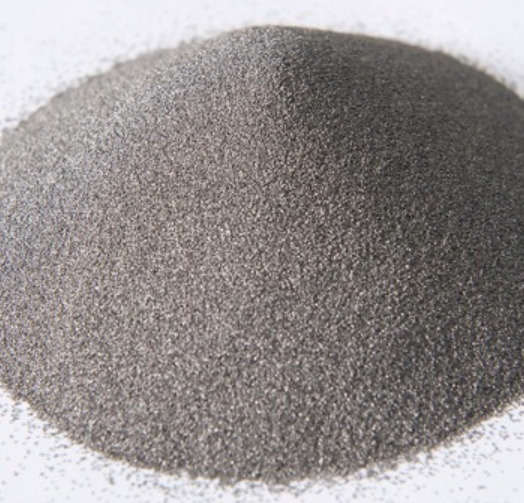
Magnesium reduction distillation method: The high-titanium slag and petroleum coke are mixed in a ratio of 100: (30-33), crushed to below 160 mesh, and sent to the fluidized bed chlorination furnace. The chlorine gas is introduced from the bottom of the furnace and evenly enters the furnace. In the bulk reaction section, it reacts with the mixture of high titanium slag and petroleum coke, and the reaction temperature is about 850 °C. The generated titanium tetrachloride gas is discharged from the furnace top and enters two series-connected partition dust collectors, so that the high boiling point materials such as ferric chloride, ferric dichloride, manganese dichloride and aluminum trichloride mixed in the titanium tetrachloride gas. Equal boilers are deposited at the bottom of the baffle collector. The gas then enters two sets of condensers connected in series to cool the titanium tetrachloride gas to below 136° C. to obtain a crude titanium tetrachloride solution. Low boilers such as silicon tetrachloride are distilled off by valve column distillation. Then it is heated to 140 ℃ in the copper scrap tower kettle, and the vaporized titanium tetrachloride is passed into the copper scrap tower, and the impurity vanadium oxychloride contained is reduced by copper to the low-valent chloride of vanadium. The purified titanium tetrachloride gas discharged from the top of the tower is subjected to a reduction reaction with magnesium at about 900° C. in a rare gas stream to obtain sponge titanium. Since the generated sponge-like titanium also contains by-product magnesium chloride and unreacted magnesium, the sponge-like titanium must be heated to about 1000°C under a vacuum of 0.1~10-3 Pa to separate impurities from the titanium.